Author: Base

Microstructure and Mechanical Performance of Bamboo Fiber Reinforced Mill-Scale—Fly-ash Based Geopolymer Mortars

Authors

Roneh Glenn D. Libre Jr., De La Salle University
Julius L. Leaño Jr., Department of Science and Technology, Philippine Textile Research Institute
Luis Felipe Lopez, Base Bahay Foundation, Inc.
Carlo Joseph D. Cacanando, Base Bahay foundation, Inc.
Michael Angelo B. Promentilla, De La Salle University
Jason Maximino C. Ongpeng, De La Salle University

Abstract

Natural fiber reinforcement in cementitious matrices is being explored to provide an environment-friendly solution for lowering the overall carbon footprint of construction materials while giving the matrix much-needed tensile strength. Short bamboo fibers extracted from Bambusa blumeana or Kawayan tinik using 5% sodium hydroxide solution and treated with 10% aluminum sulfate solution are used to reinforce zero-cement geopolymer mortars. Bamboo fibers with varying lengths of 10 mm, 20 mm, and 30 mm are mixed with mill-scale – fly ash-based geopolymer in varying 0%, 0.5%, 1%, 1.5%, and 2% fiber loading per weight of specimen sample. Compressive strength and split tensile strength tests are administered to small cylinder samples, 50 mm in diameter by 100 mm in height, in accordance with ASTM C780. An optimum fiber length of 20 mm and fiber loading of 1.4% by weight is determined using Response Surface Methodology (RSM). The addition of bamboo fibers increased the unconfined compressive strength up to 292.41% compared to specimens without bamboo fibers. The split tensile strength also improved by up to a 355.82% increase compared to control samples. The corresponding high-strength and low-strength samples are also subjected to Fourier-transform Infrared Spectroscopy – Attenuated Total Reflectance (FTIR-ATR) to investigate and compare the stretching of bands between the raw materials and tested specimens. Scanning Electron Microscopy – Energy Dispersive X-Ray analysis (SEM-EDX) is used to show microscopic images and the elements present in the selected samples. The implications of the results on the material development of bamboo fiber-reinforced geopolymer mortar for construction are discussed.

In-Plane Shear Behavior of Unreinforced Masonry Wall Strengthened with Bamboo Fiber Textile-Reinforced Geopolymer Mortar

Authors

Roneh Glenn D. Libre Jr., De La Salle University
Julius L. Leaño Jr., Department of Science and Technology, Philippine Textile Research Institute
Luis Felipe Lopez, Base Bahay Foundation, Inc.
Carlo Joseph D. Cacanando, Base Bahay Foundation, Inc.
Michael Angelo B. Promentilla, De La Salle University
Ernesto J. Guades, University of Guam
Lessandro Estelito O. Garciano, De La Salle University
Jason Maximino C. Ongpeng, De La Salle University

Abstract

Old structures that are made of adobe or brick walls are usually unreinforced and not designed for lateral forces. In-plane loads applied to unreinforced masonry walls (URM) are the usual cause of damage and failure of old buildings. In this research, small unreinforced brick masonry wallettes, 350 mm × 350 mm and 50 mm in thickness, are strengthened using bamboo fiber textile and plastered to the face of the walls using short bamboo fiber-reinforced geopolymer mortar. The wallettes are subjected to diagonal shear tests as described by ASTM E519 to investigate the in-plane shear performance of the strengthening method. The performances of 5 wallettes strengthened on one-side with mortar only, 5 wallettes on both-sides with mortar only, 5 wallettes with textile plastered on one-side only, and another 5 wallettes with textile plastered on both-sides, are compared to 5 control specimens without any strengthening. It is observed that the wallettes strengthened on one side and both sides with textile yield an increase in shear of about 24% and 35% in average, respectively. Failure modes show that the usual failure for URM is running bond failure and for strengthened URM is columnar failure. The implications of the results can be used in developing textile-reinforced geopolymer mortar systems to strengthen URM walls.

Assessment of Fire Resistance Performance of Composite Bamboo Shear Walls

Authors

Lily Tambunan, Institut Teknologi Bandung, Indonesia
Luis Felipe Lopez, Base Bahay Foundation, Inc.
Andry Widyowijatnoko, Institut Teknologi Bandung, Indonesia
Yulianto Sulistyo Nugroho, Universitas Indonesia

Abstract

This study is aimed to examine which configurations of mortar covering give the best fire protection for the composite bamboo shear wall system. The research is done in two stages, first is the non-standardized pre-test stage, which results will become the basis for determining the specimen specification. In the second stage, the specimen with the best fire resistance level is tested with standardized tests referred to as SNI 1741-2008 and ISO 834-1-1999. Fire resistance performance was measured according to integration and insulation level expressed in minutes. In the pre-testing stage, bamboo-wall configurations with flattened bamboo and mortar plaster on one-sided and two-sided are evaluated according to the burning time, and the highest temperature reached on the unexposed side. The pre-testing result shows that the chipped and cracked mortar conditions affect the high temperature of the specimen and the burning of the flattened bamboo, and vice versa. In the standardized test in the second stage, it was found that the specimen with one-sided mortar had an insulation and integration level of 30 minutes, while the specimen with two-sided mortar was 120 minutes. These results indicate that mortar condition and location affect the bamboo-plaster wall’s fire resistance performance.

Kanya Kawayan Weaving Center in Batangas Built with Base Bahay’s Sustainable Construction Technology

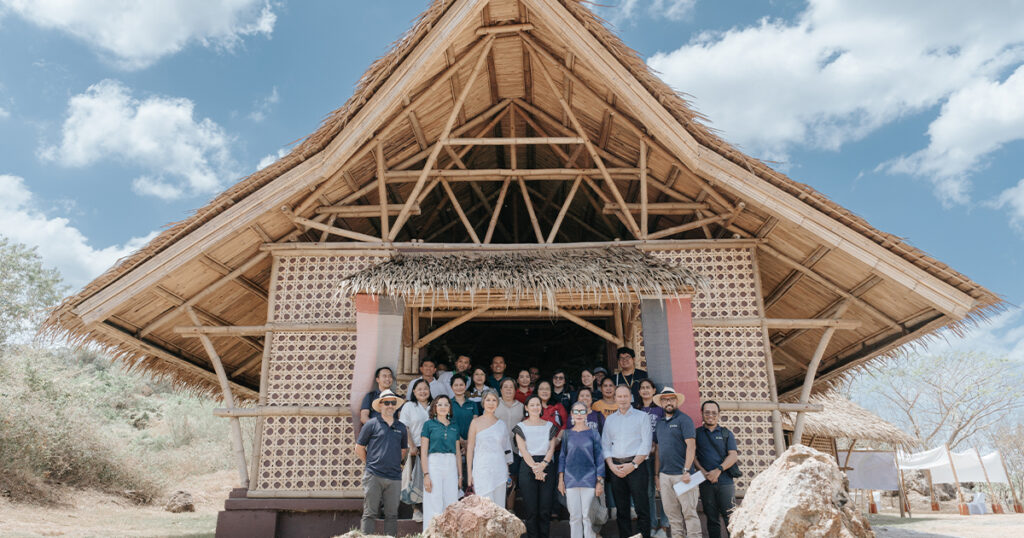
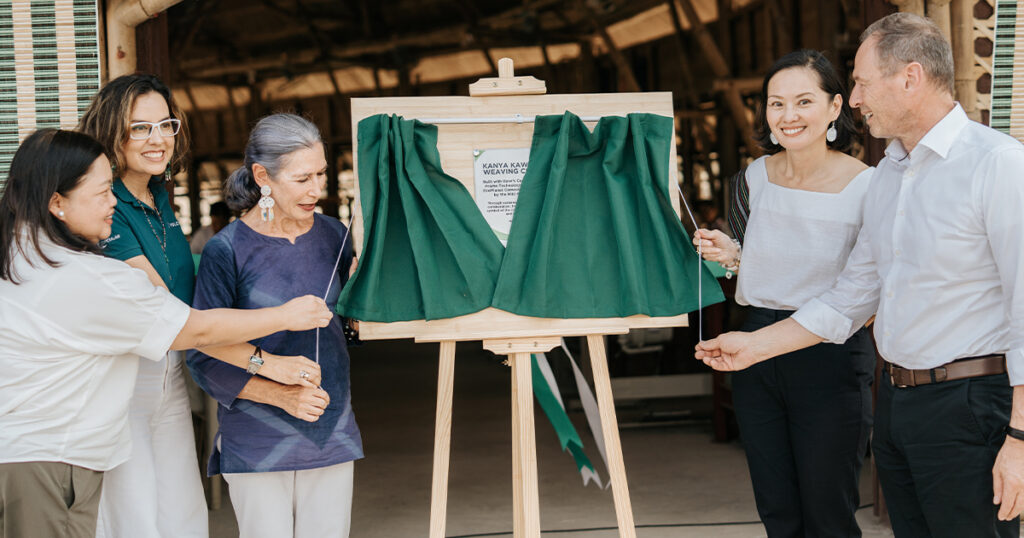
In the fields of Nasugbu, Batangas, humble agricultural products are at the forefront of sustainable livelihood and architecture, thanks to the recent partnership of two like-minded social enterprises: Kanya Kawayan and Base Bahay. It’s a collaboration that will soon see the completion of the Kanya Kawayan Weaving Center— a space where Filipinos can celebrate the coming together of sugar cane and bamboo products, all with the aim of creating a more sustainable future for the country.

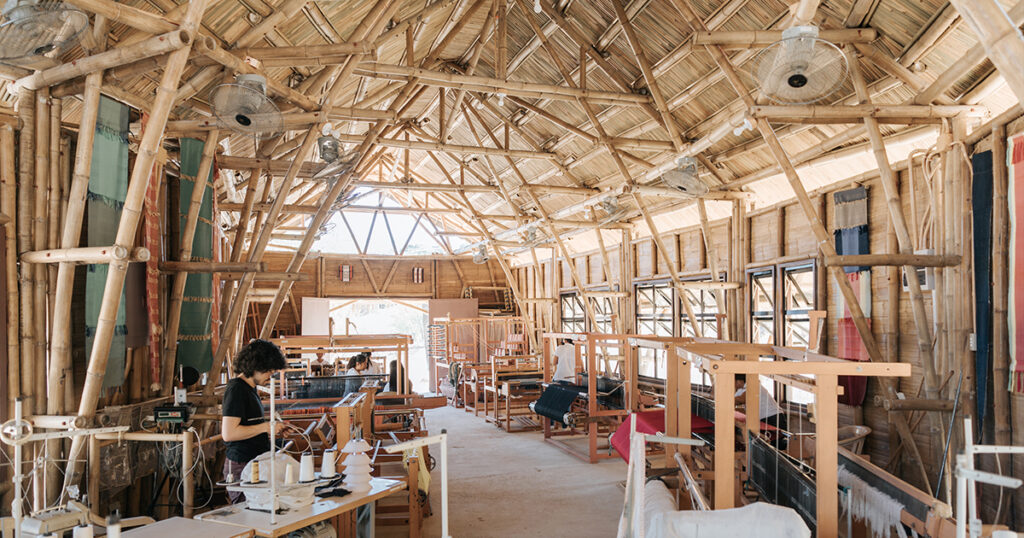
The 148-sq m Kanya Kawayan Weaving Center will house the organization’s production of artisanal creations, which help generate employment and alternative livelihood opportunities for around 40 wives and family members of the local farmers in the area. Kanya Kawayan transforms bagasse, a sugarcane residue, into a pioneering, eco-friendly, natural weaving fabric used for their products.

They are also one of Base Bahay’s bamboo supply and treatment partners.

“I am happy to attest that the foundations put by our partners today are strong and firmly established as they come. Base Bahay is a seasoned partner of ours and has, through the years, stayed the course on sustainability, come hell or high water,” says Beatriz Roxas, Kanya Kawayan president.

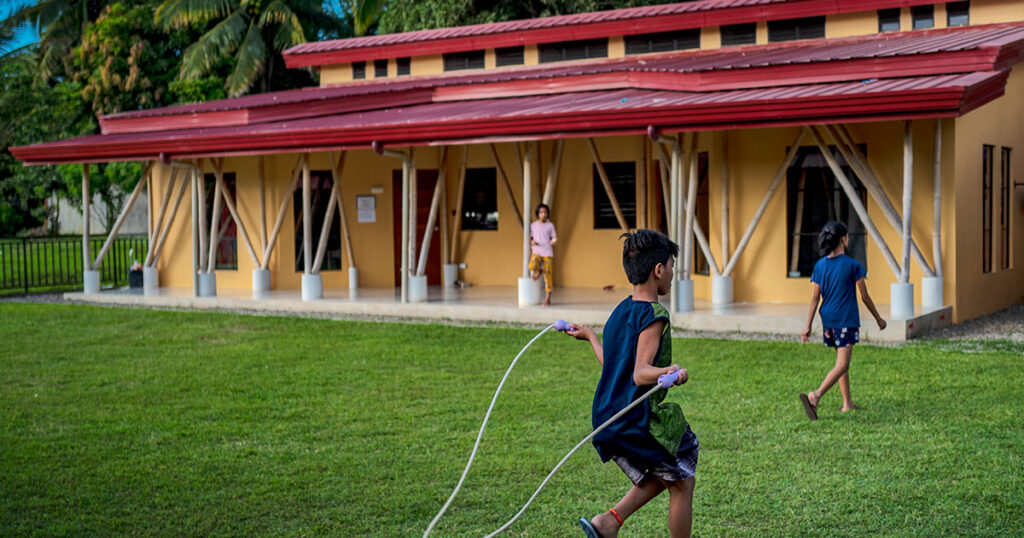
Using Base Bahay’s Cement Bamboo Frame Technology, which features bent bamboo poles that give the structure its curves, the Kanya Kawayan Weaving Center also uses ECOPlanet cement, which leaves 30 percent less carbon footprint compared to ordinary cement. The building is as resilient as it is sustainable; the structure is resistant to earthquakes, typhoons, fire, and insect infestations.

Thanks to its unique design, the center has received the honor of being the first project to use the ECOPlanet Cement in the Holcim Philippines, Inc.’s  Houses of Tomorrow, a project which finds and supports sustainable construction technologies through innovation and smart design, “to demonstrate that a low-carbon built environment is achievable and empowers people to live sustainably today.”

Base and Holcim are in discussions to develop a lifecycle analysis of structures such as the Kanya Kawayan Weaving Center to see how they contribute to the reduction of our carbon footprint compared to conventional structures.

The construction of the weaving center began in July 2022 and was completed in December 2022.

“We are happy to support like-minded partners like Kanya Kawayan and Holcim, as we have been brought together by a common innovation mindset – one that is focused on being environment-friendly and sustainable,” says Maricen Jalandoni, Base Bahay president. “We will soon open a structure within which all these technologies will finally be put into practice.”

Bamboo Breakthroughs in 2022: Non-Profit Base Bahay Grows a Community of Bamboo Advocates across the Philippines

From the government to the academe to the private sector, bamboo brought together the housing community in 2022 through initiatives spearheaded by the non-profit Base Bahay Foundation (Base).

Partnerships to build bamboo homes for Filipino communities

Committed to a vision of “Building sustainable foundations for the future”, Base works with its network of partners to build homes for various beneficiaries all over the country using Base’s Cement-Bamboo Frame Technology (CBFT).

Base’s CBFT is certified by the Accreditation of Innovative Technologies for Housing (AITECH) and the National Housing Authority, making each Base home comfortable, affordable, disaster-resilient, and ecologically friendly.    

In 2022, 188 new houses were added to Base’s growing portfolio of over 1,200 disaster-resilient residences built across the Philippines, sheltering around 5,000 individuals in 14 communities.  Best of all, each “build” brings livelihood to its host community. This also includes the Negros Occidental Impact 2025 (NOI2025) project with Habitat for Humanity, which aims to build 10,000 cement-bamboo frame homes in response to the growing need for socialized homes in disaster-prone areas, particularly in Visayas.

As part of its initiative to scale up its projects globally, Base also has international collaboration in Nepal to build more disaster-resilient communities using its technology.

Last year the organization also moved beyond housing to co-develop the Kanya Kawayan Weaving Center in Nasugbu, Batangas, in partnership with Holcim Philippines, Inc. and Kanya Kawayan, a like-minded social enterprise that aims to elevate the use of bamboo. The 148-sq m Weaving Center will house the organization’s production of artisanal creations, which help generate employment and alternative livelihood opportunities for Batangueños.

With the aim to empower communities with further economic opportunities, Base also works with Ayala Foundation, Inc., and other organizations on the Planting for Productivity (P4P) project that teaches the community about organic urban farming.

“As leaders in the field of sustainable housing technologies, we recognize that we play a pivotal role in ensuring that every Filipino has access to a home,” said Base Bahay General Manager Dr. Pablo Jorillo, referencing the country’s housing backlog as he points out bamboo’s abundance. “We are excited to share that Base has signed a memorandum of agreement with five other organizations for the construction of bamboo structures and the implementation of other programs in their respective communities.  We hope to unlock more partnerships that will help us provide homes for more Filipino families.”

Working to bring bamboo into mainstream construction

Shares Base Bahay Head of Technology Luis Felipe Lopez Munoz: “a key part of our commitment to promoting sustainable housing technologies is constant innovation. Our vision is to be the global reference for bamboo and sustainable construction in order to help countries find alternative construction methods.”

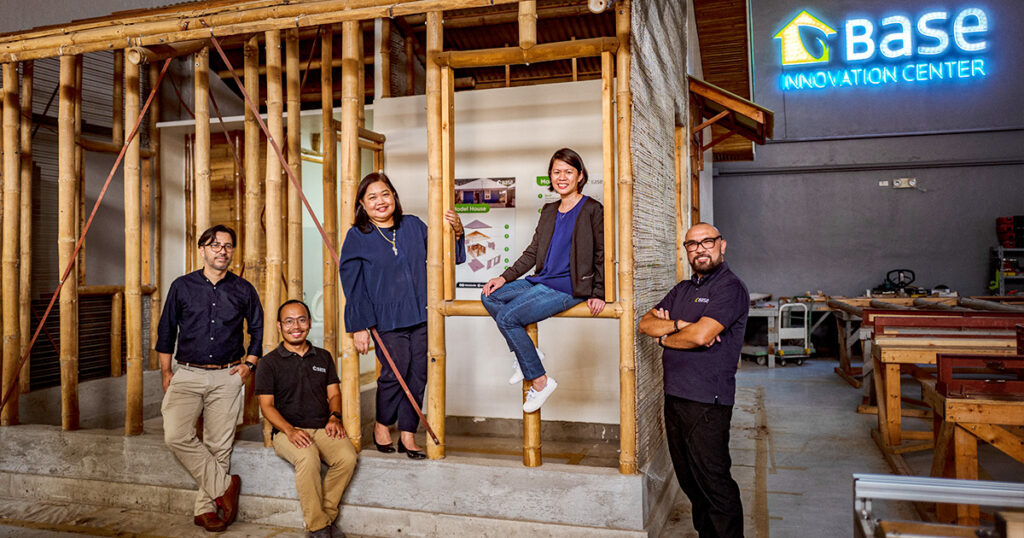
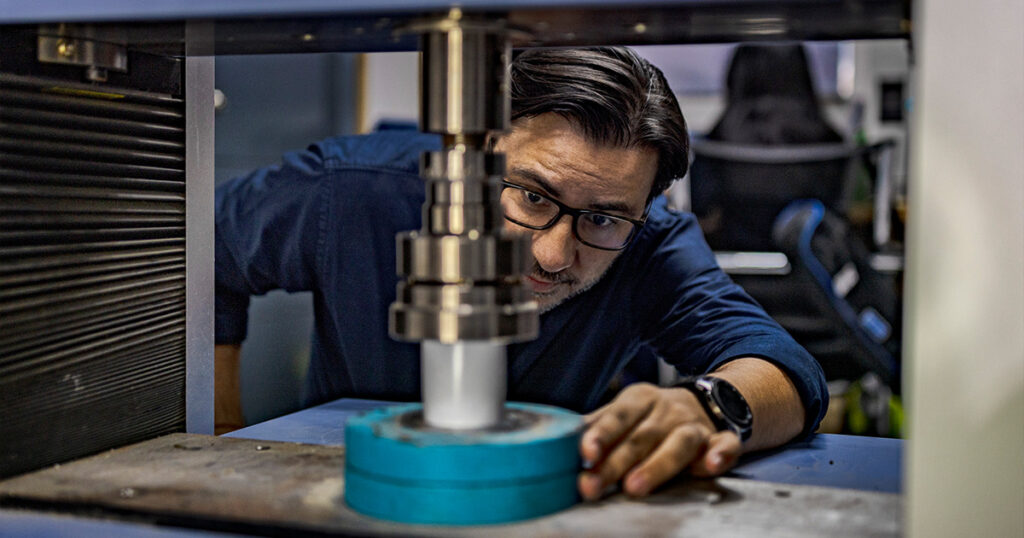
At the Base Innovation Center (BIC) in Makati, the country’s first research and testing facility for sustainable and disaster-resilient construction technologies, Base is leading the charge on research and innovation surrounding the use of bamboo for the affordable housing sector.

Passionate about advocating the use of bamboo in mainstream construction, Base works with the Association of Structural Engineers of the Philippines (ASEP) to advocate the creation of our own National Structural Code for Bamboo.   

As part of its research and development initiatives in 2022, Base Bahay formed two new key partnerships with local universities Polytechnic University of the Philippines (PUP) and the Technological University of the Philippines (TUP). BIC also partnered with the Department of Trade and Industry – Philippine Textile Research Institute (DOST-PTRI) for further research opportunities and to bring its innovative products to Base communities.

Today, BIC works with 14 local and international university partners, allowing them to engage in special projects, such as the use of an augmented reality application in panel fabrication with incon and ETH Zurich, and Panel Fabrication Table with Hilti P4.

“Since its launch in 2021, BIC has gained more attention from different local government units, institutions, and organizations globally with more people visiting the facility and engaging in partnerships with Base,” adds Luis Lopez.  “So far, BIC has conducted 14 research works and completed 5 publications in collaboration with different local and international institutions.”

Adds Jorillo: “These research partnerships are essential to BIC and Base, as we continue to push for sustainable construction, particularly CBFT, to be the building technology of choice in the industry.  CBFT homes are disaster-resilient, environment-friendly, and sustainable –important elements for permanent housing here in the Philippines where we face multiple typhoons every year.”

Within its own organization, Base invested in organizational development, and is standardizing its processes through the deeper involvement of its own employees in drafting plans and strategies.

“We have likewise started to undergo a series of training courses on Quality Management, so we can successfully adopt the system and get certified for ISO 9001,” Jorillo says.

Teaching a new generation of bamboo builders

On top of its focus on research and development, Base Bahay continues to equip the housing and construction industry by offering Continuing Professional Development (CPD) Programs to architects, engineers and other construction professionals; and skills training to workers.  Last year, online and in-person programs on Bamboo Standards and CBFT saw over 800 participants composed of professional builders and bamboo enthusiasts.

One of the highlights of Bamboo Month last September was the Bamboost, a forum on bamboo architecture and design developed by Base to upscale green construction.  Leading the line-up of local and international experts speaking at the forum was Jörg Stamm, a Colombia-based bamboo construction specialist and trainer, widely known for his design and construction of engineered bamboo structures in different countries.  Stamm was joined by Base Head of Technology Luis Felipe Lopez and three heavyweights in the field of bamboo architecture: architect and urban designer Munir Vahanvati, Filipino-American architect  and Kawayan Collective co-founder Ray Villanueva,  and multi-awarded Filipino architect Christian Salandanan who is widely known for his work with bamboo.

“This year, we are looking forward to establishing even more programs and other initiatives that will continue to put bamboo and CBFT front and center in the Philippines’ housing and construction industry,” says Maricen Jalandoni, Base Bahay president. “We believe this kind of technology is what we need to fulfill Filipinos’ need for more affordable yet high-quality and sustainable homes.”

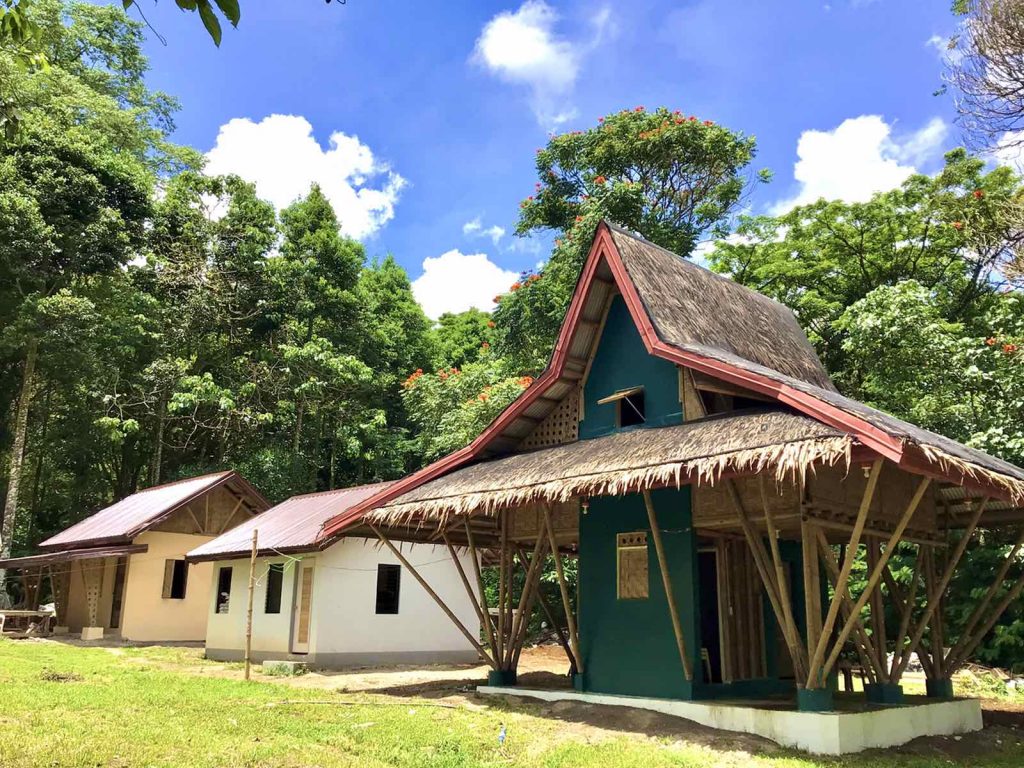
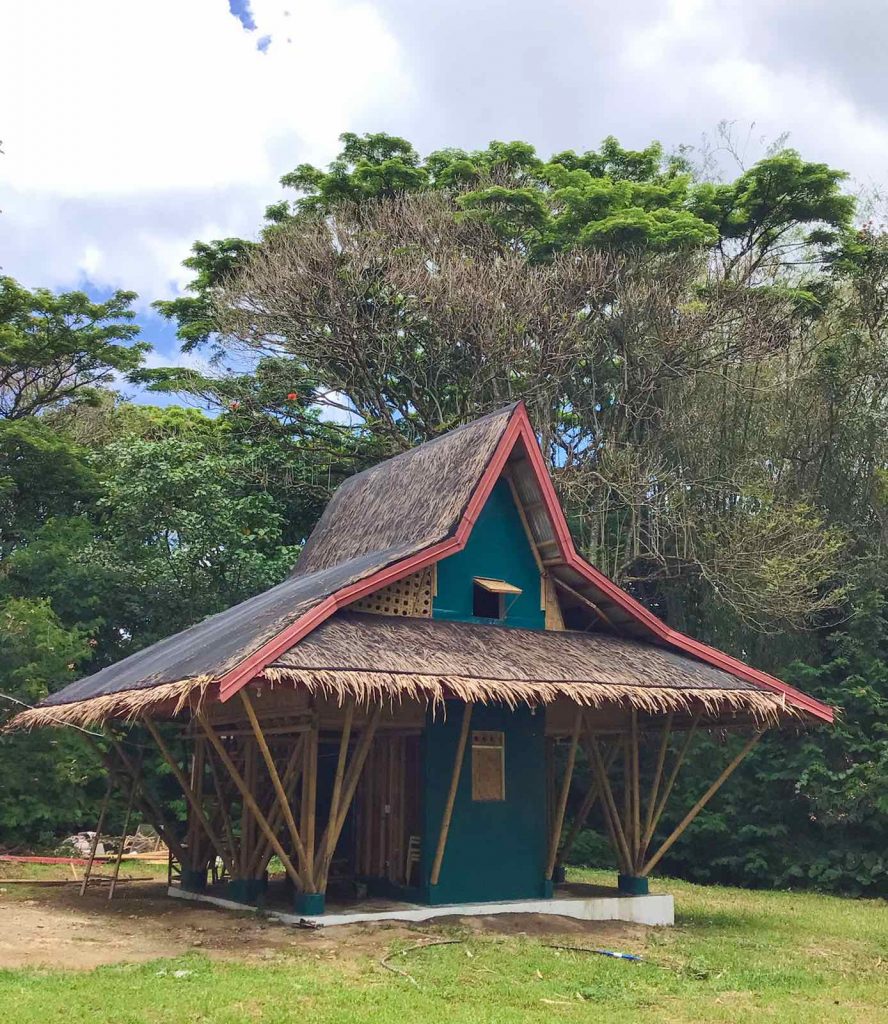
Torogan House

BASE, in partnership with the Hineleban Foundation, designed the “Torogan” inspired Cement-Bamboo Frame house that is not just sustainable and disaster-resilient but has taken into account the community’s geographical and cultural needs.

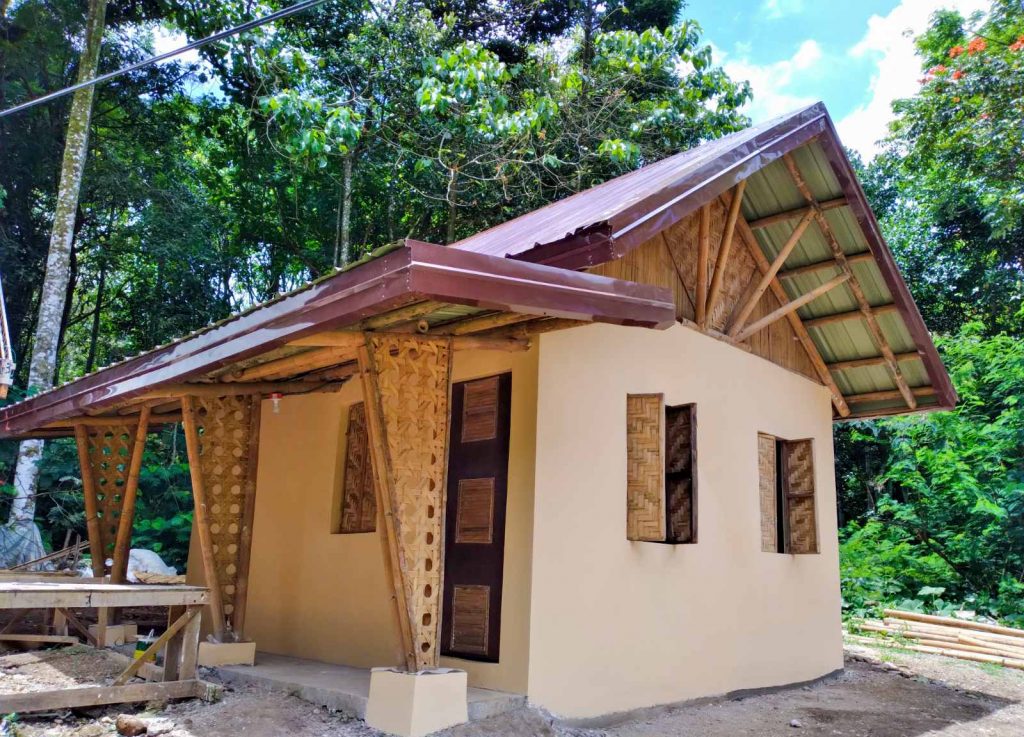
This project, composed of 2 standard model houses and the Torogan house features the Cement-Bamboo Frame Technology (CBFT) developed by Base with vernacular designs. With more than just appealing designs, these houses are disaster-resilient, sustainable, and environment-friendly.

The Torogan, which translates to “resting place”, is a type of home built by the Maranaos using native materials. Together with BASE’s architects and engineers, a community in Lanao created a new housing design incorporating the Torogan and the CBFT.

RESULTS

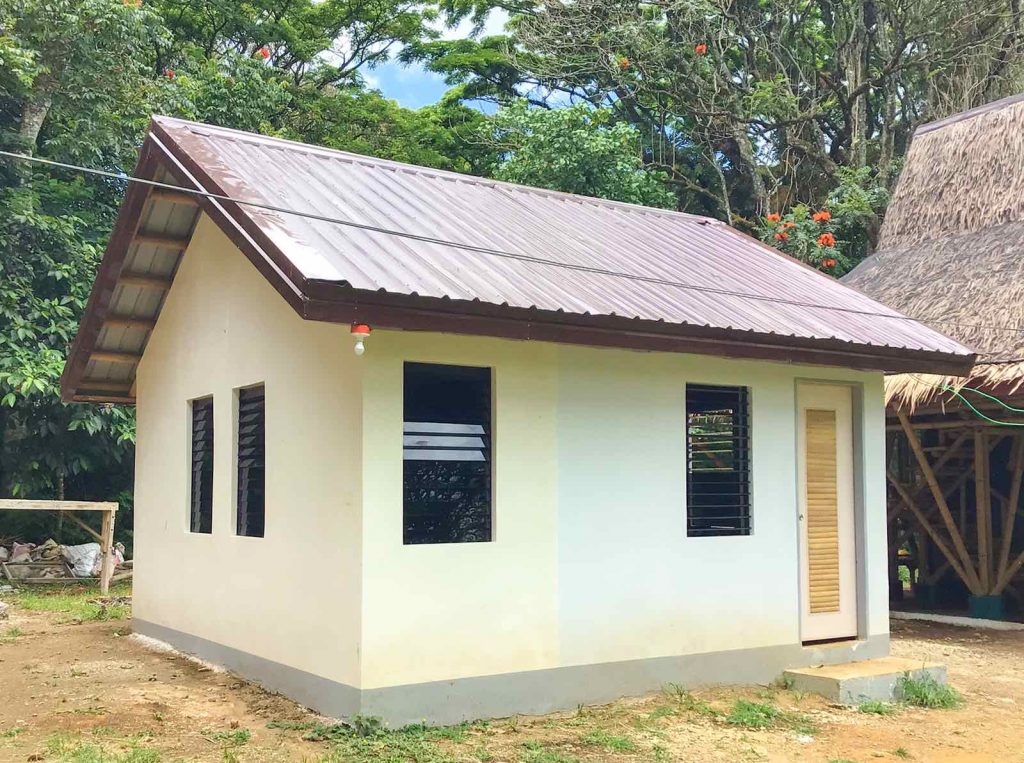
Total Number of Model Houses: Two (2) standard model houses; One (1) Torogan House
Area: Hineleban Farm, Bukidnon
Housing Type: Single-Storey; Two-Storey (Single detached)